

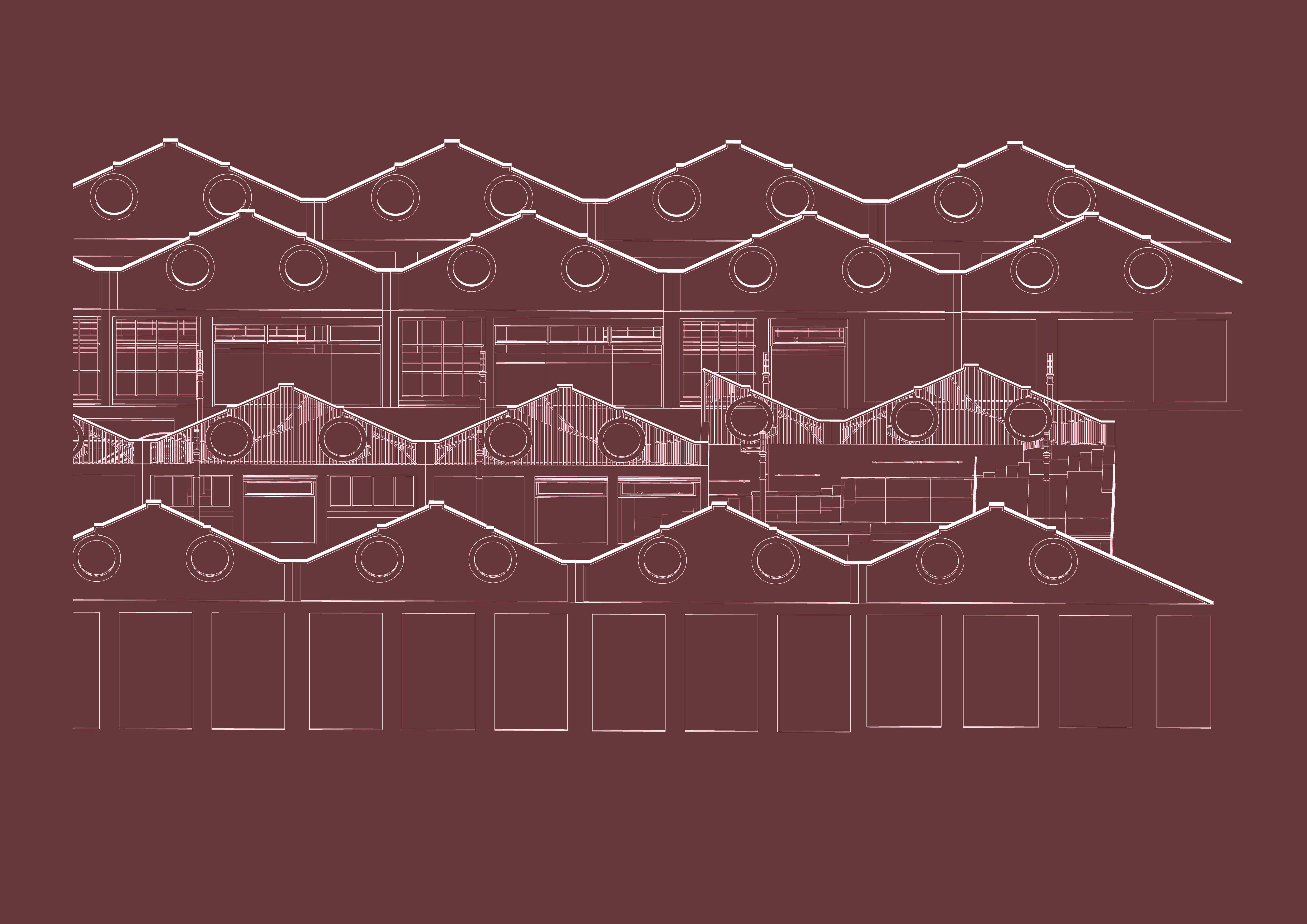
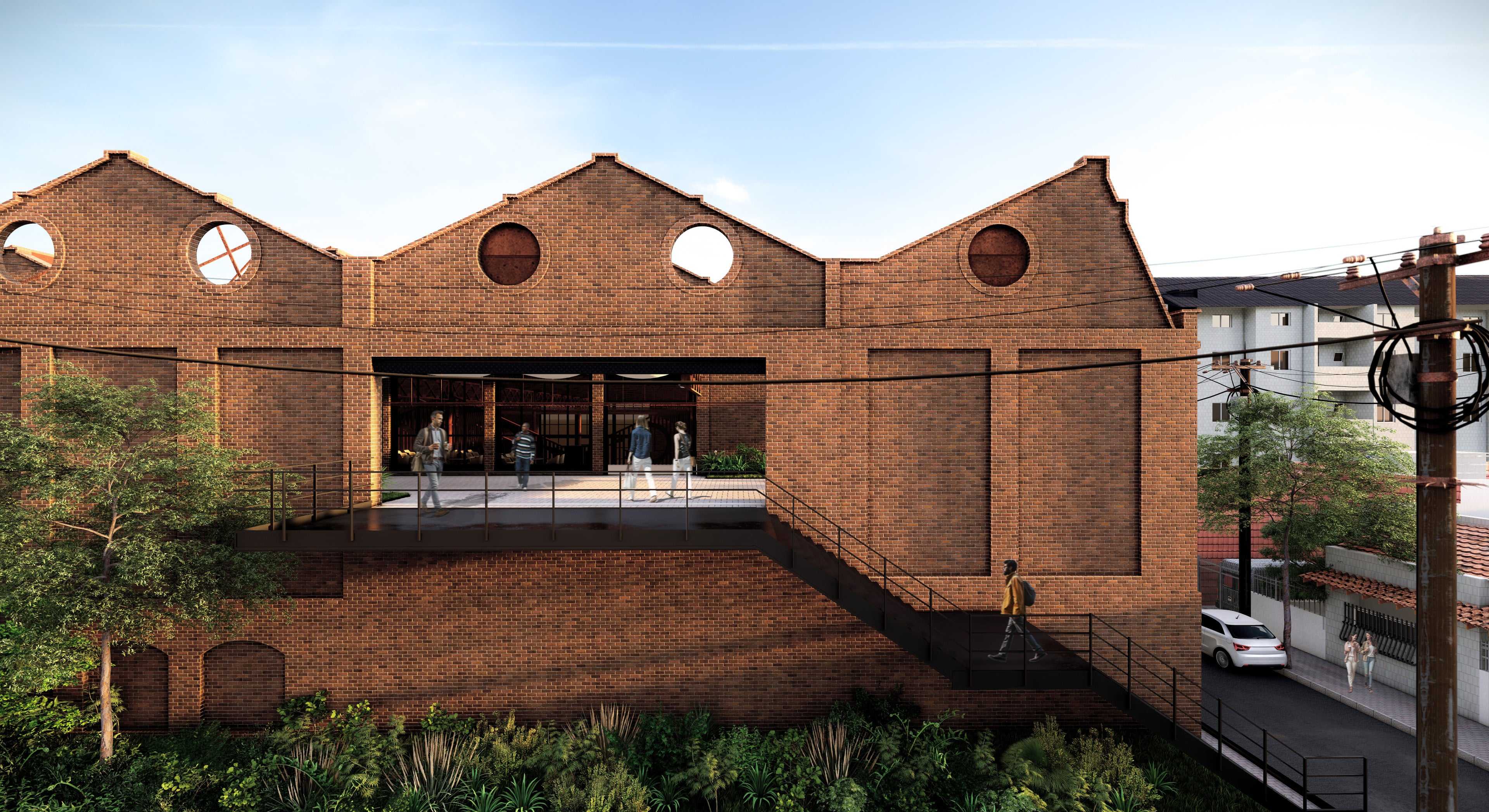
The depot’s saw-tooth geometry is reinterpreted as a spatial device. Triangular handrails and partitions mimicking the original structure, guiding circulation and producing tactile interactions that weave the historical memory with contemporary use.
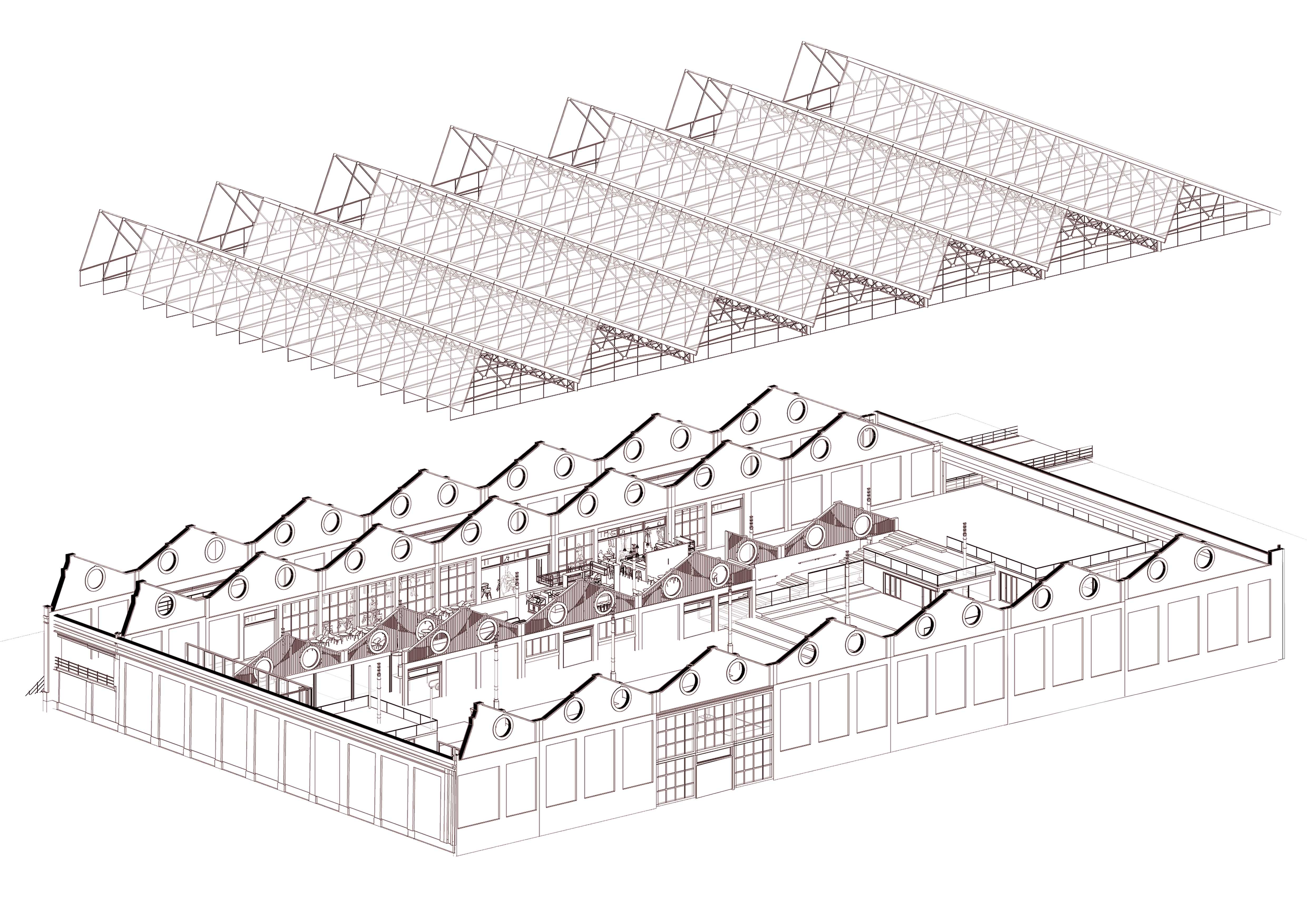
The axonometric shows the depot’s industrial shell retained as a fixed structural grid, while platforms, studios, and rehearsal spaces form adaptable infill that can shift, evolve, and be reconfigured over time.
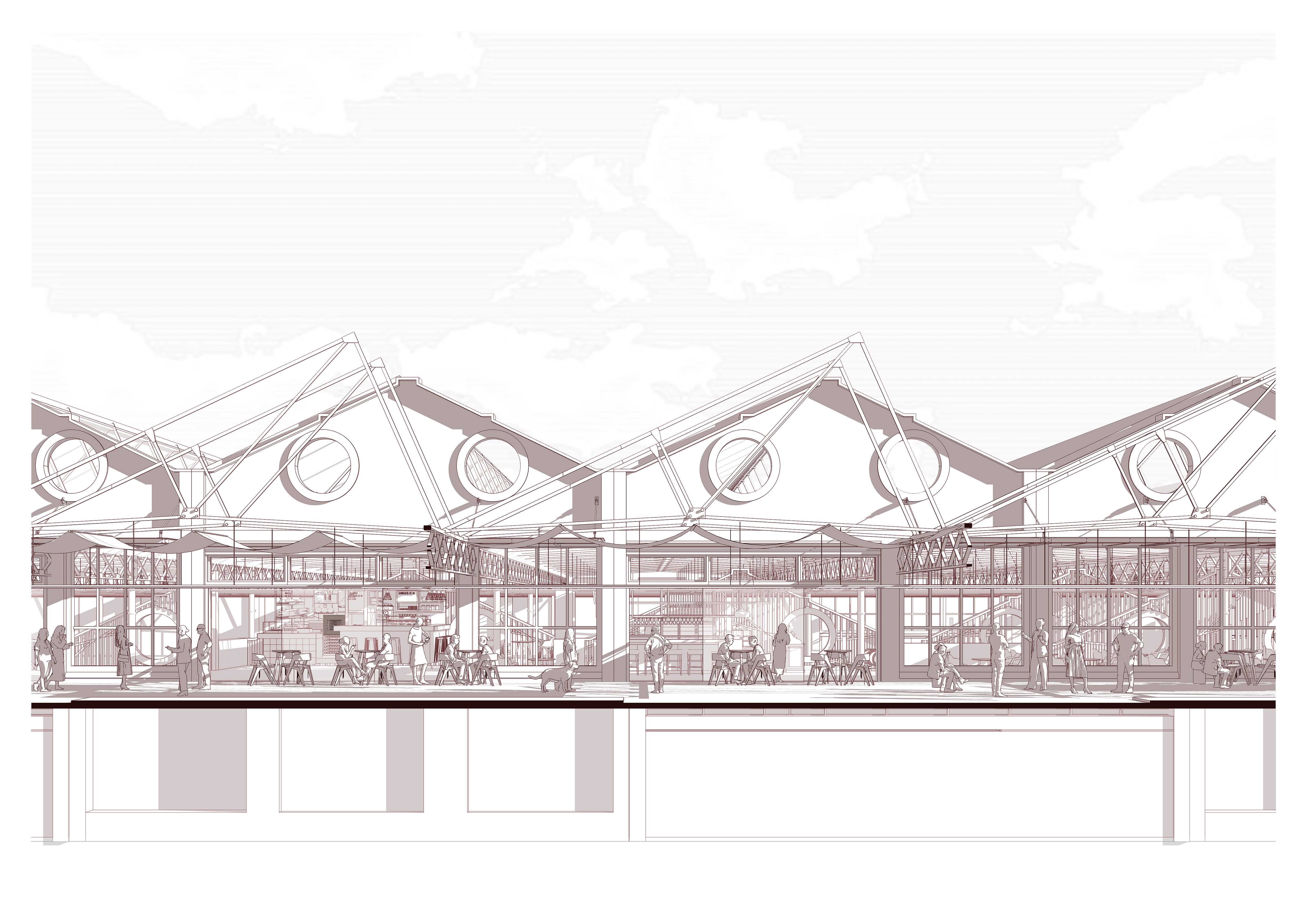
The Civic Street transforms the depot into a permeable social spine, linking Newtown actively. Public programs spill into the laneway, turning daily life and creativity into a continuous public stage.
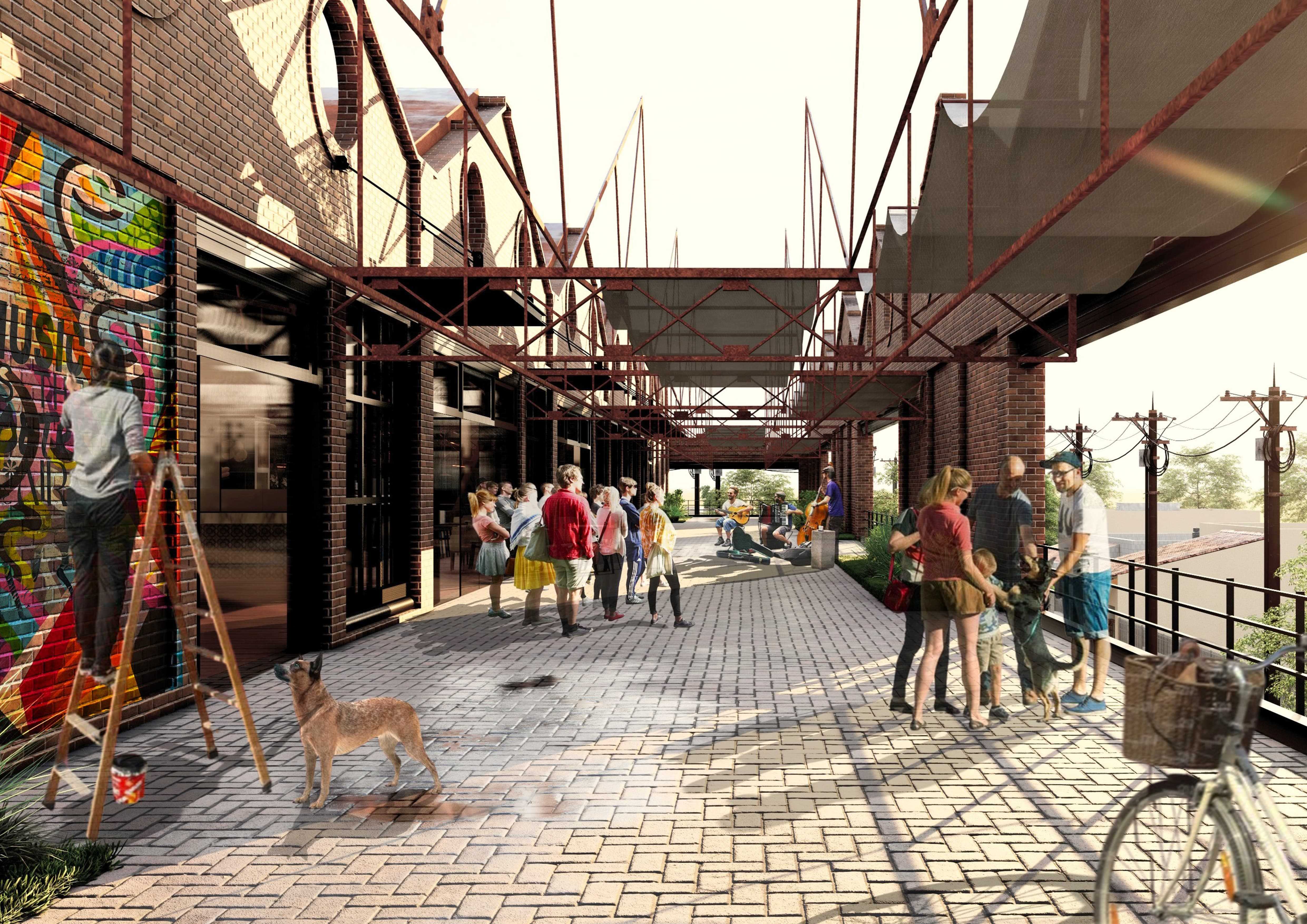
The renewed laneway operates as a cultural corridor where artistic production, informal gathering, and daily activities occur simultaneously. The former industrial relic becomes a collaborative urban ground.
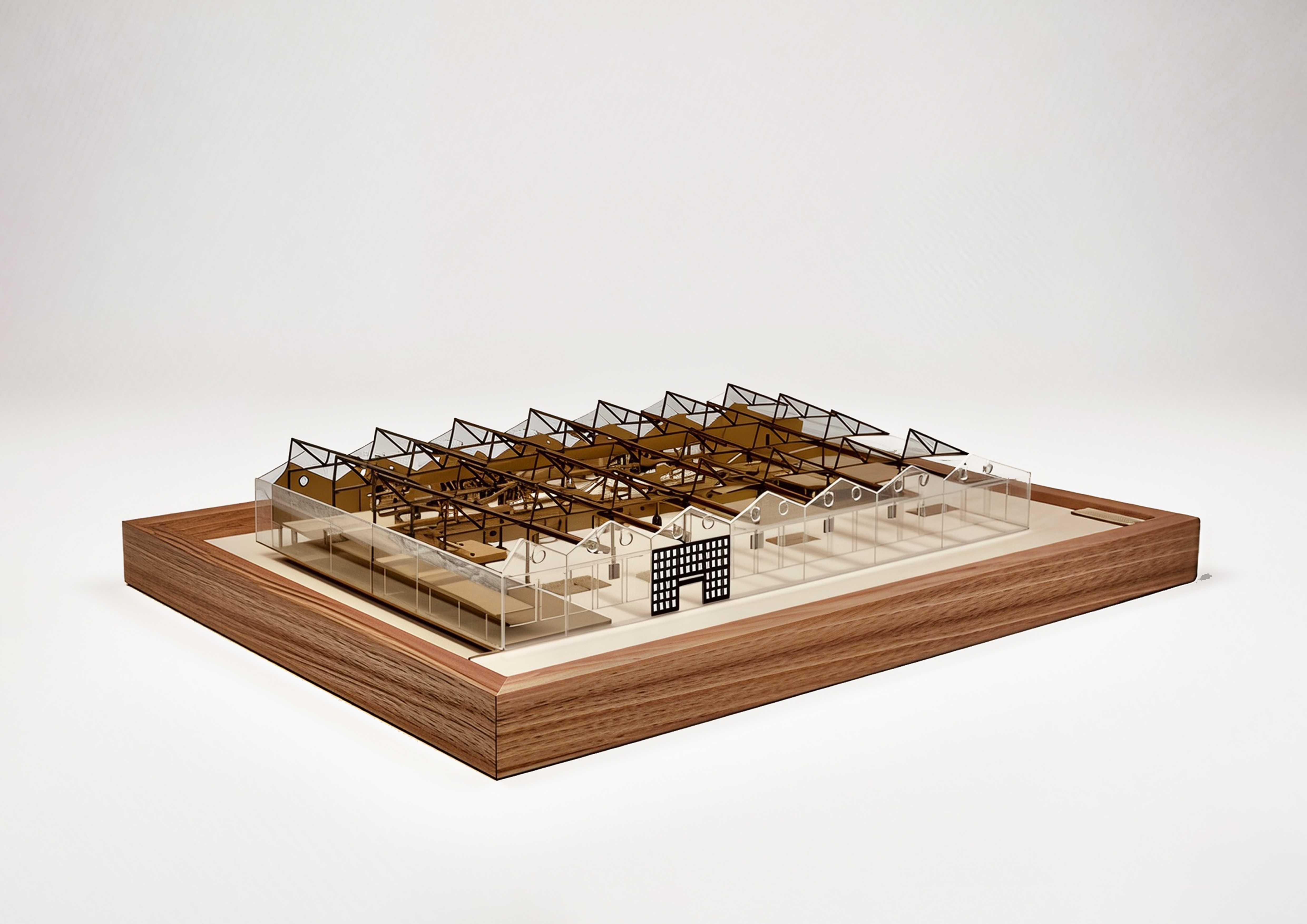
The physical model illustrates the relationship between the preserved structural frame and new insertions, highlighting how the open scaffold, sawtooth rhythm, and flexible platforms support an evolving, community-centered environment.