Coolth is not a Luxury, It is a Common Right
With the rapid development of climate change, urban heat, and a global ener�gy crisis, people’s thermal comfort and their mechanical systems are becom�ing increasingly stratified. It is clear that the privilege of access to air condi�tioning and cooling systems not only perpetuates social inequality but also
intensifies the environmental burden. Therefore, this project aims to break the
repetitive and restrictive structure by exploring a passive method of cooling
through architectural design. The project aims to create a shared, ecological
“coolth” that is generated by social activities and natural phenomena, yet
remains open to the public.
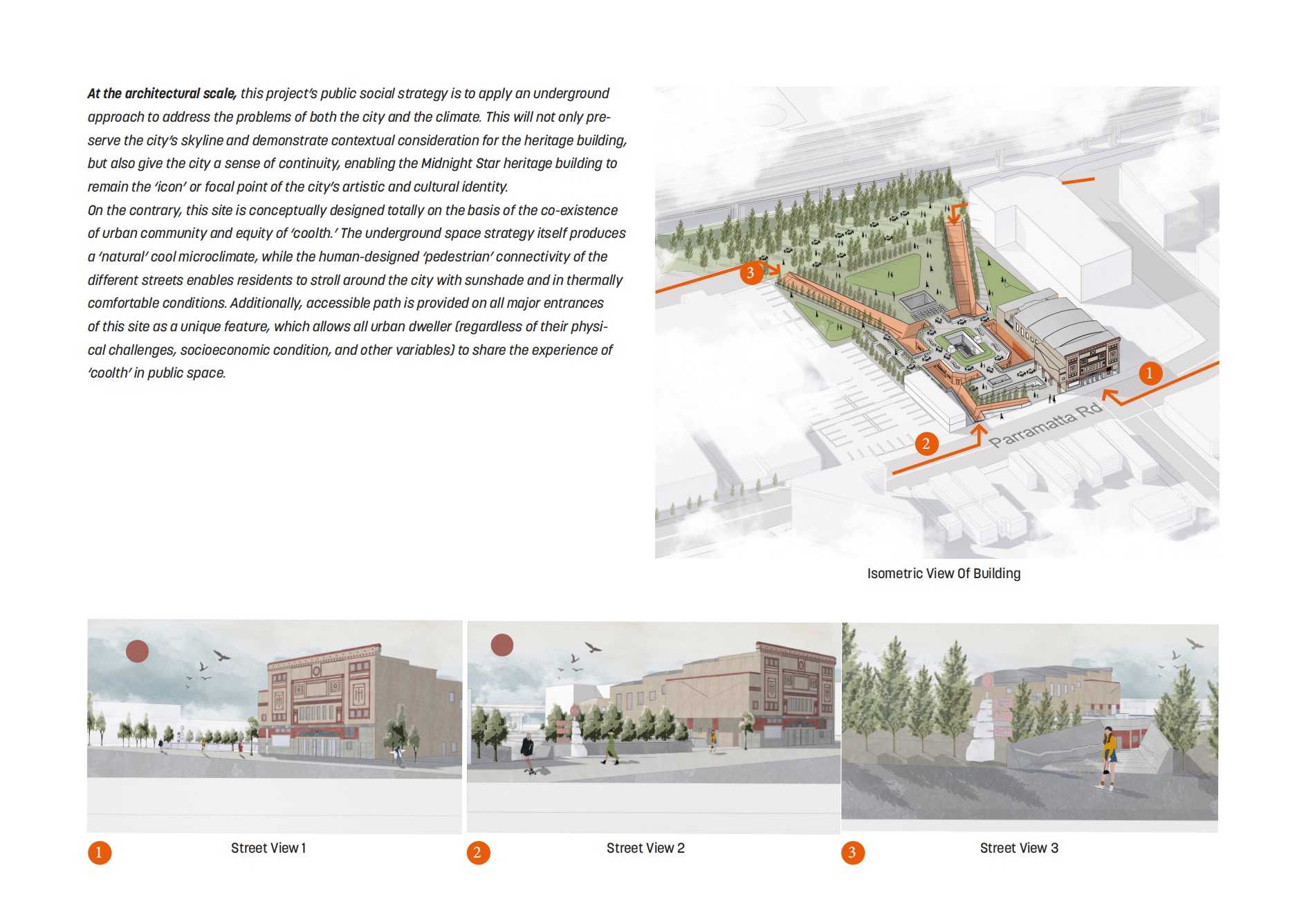
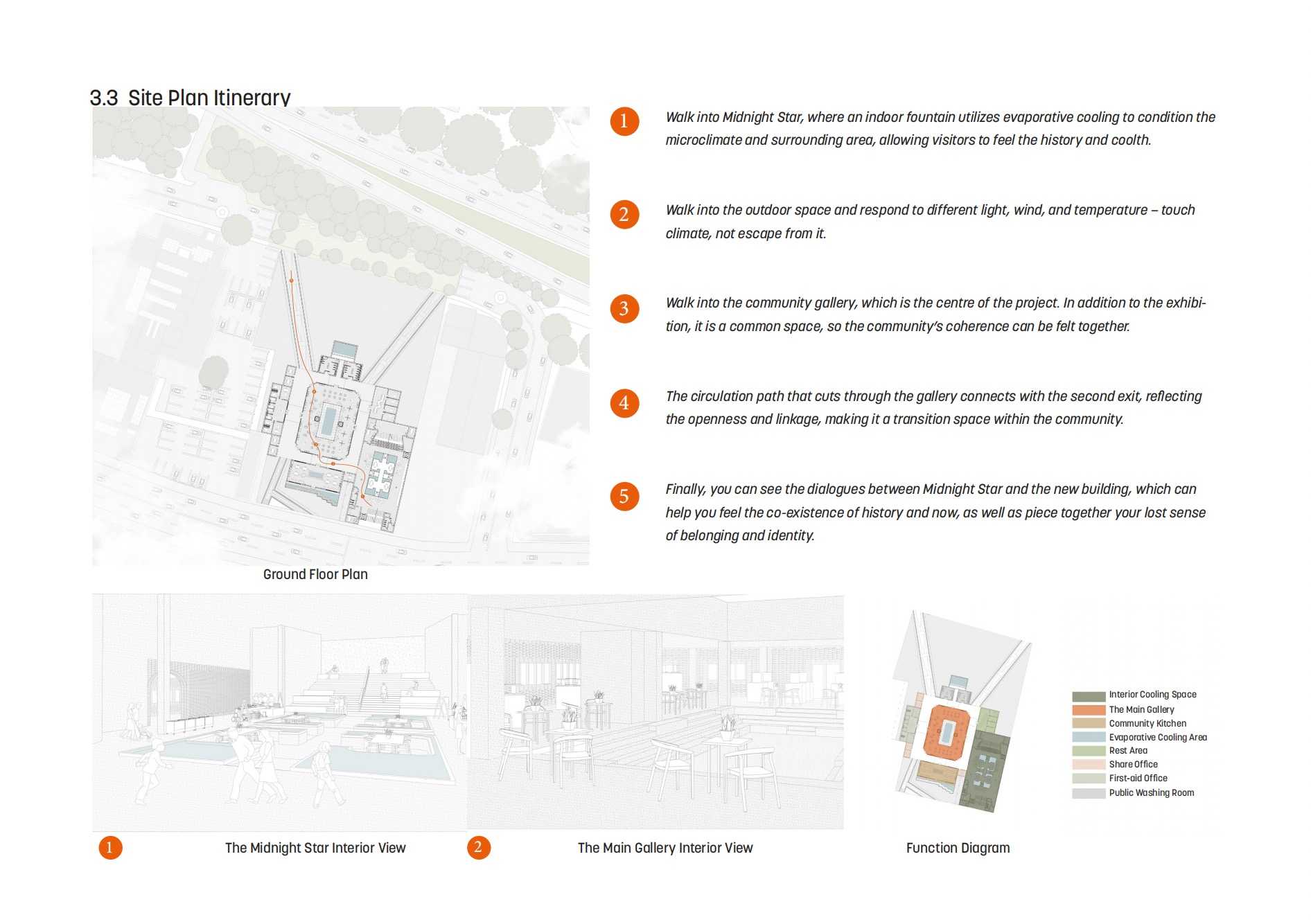
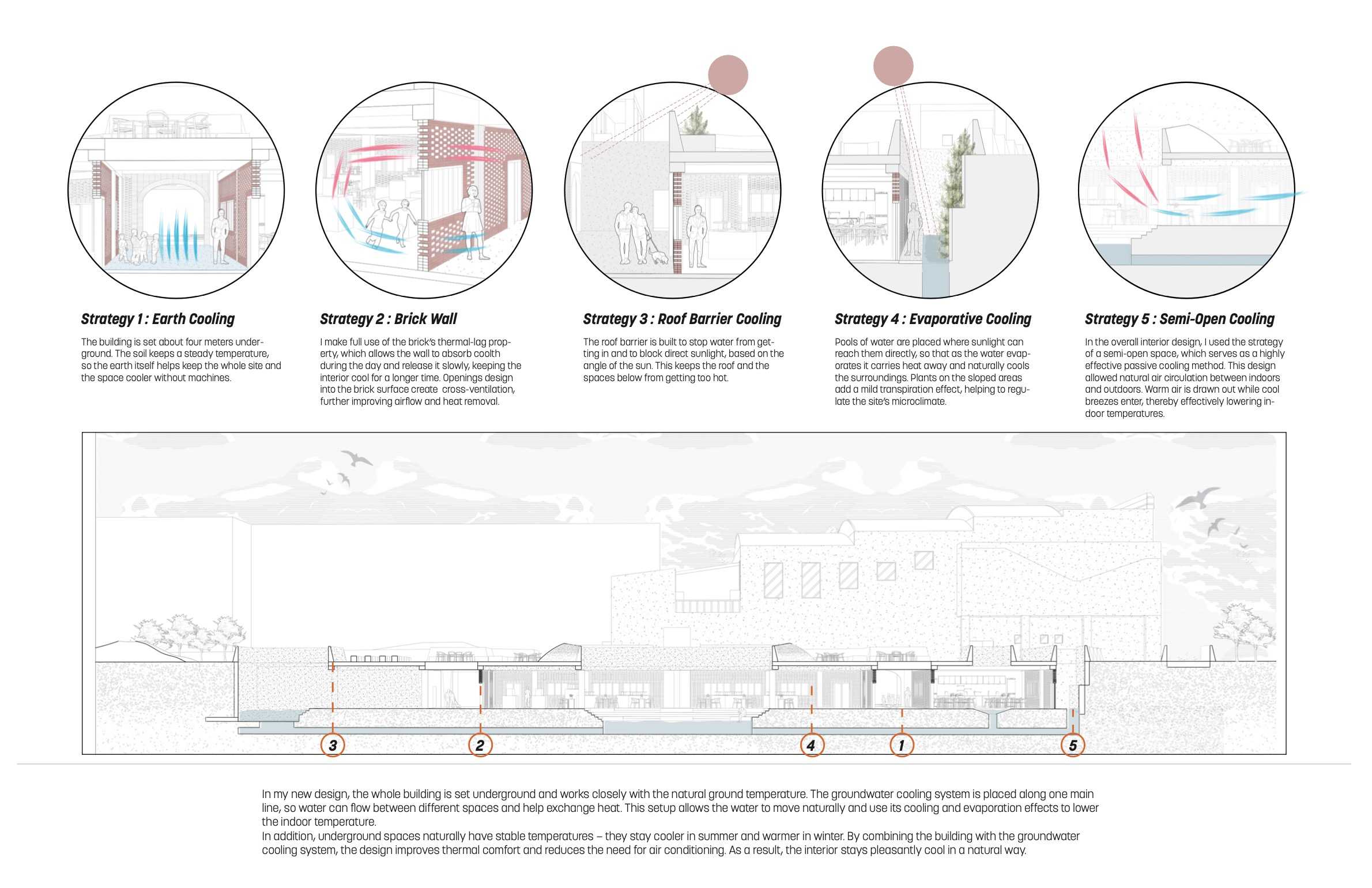
This project utilizes a micro-site and employs an underground water-cooling
system and earth-coupling to passively cool and regulate the microclimate
of the site and its surrounding environment through evaporation. This is not
only a climate control technique but also lowers the air temperature of this
zone through evaporative condensation, hence introducing the term “shared
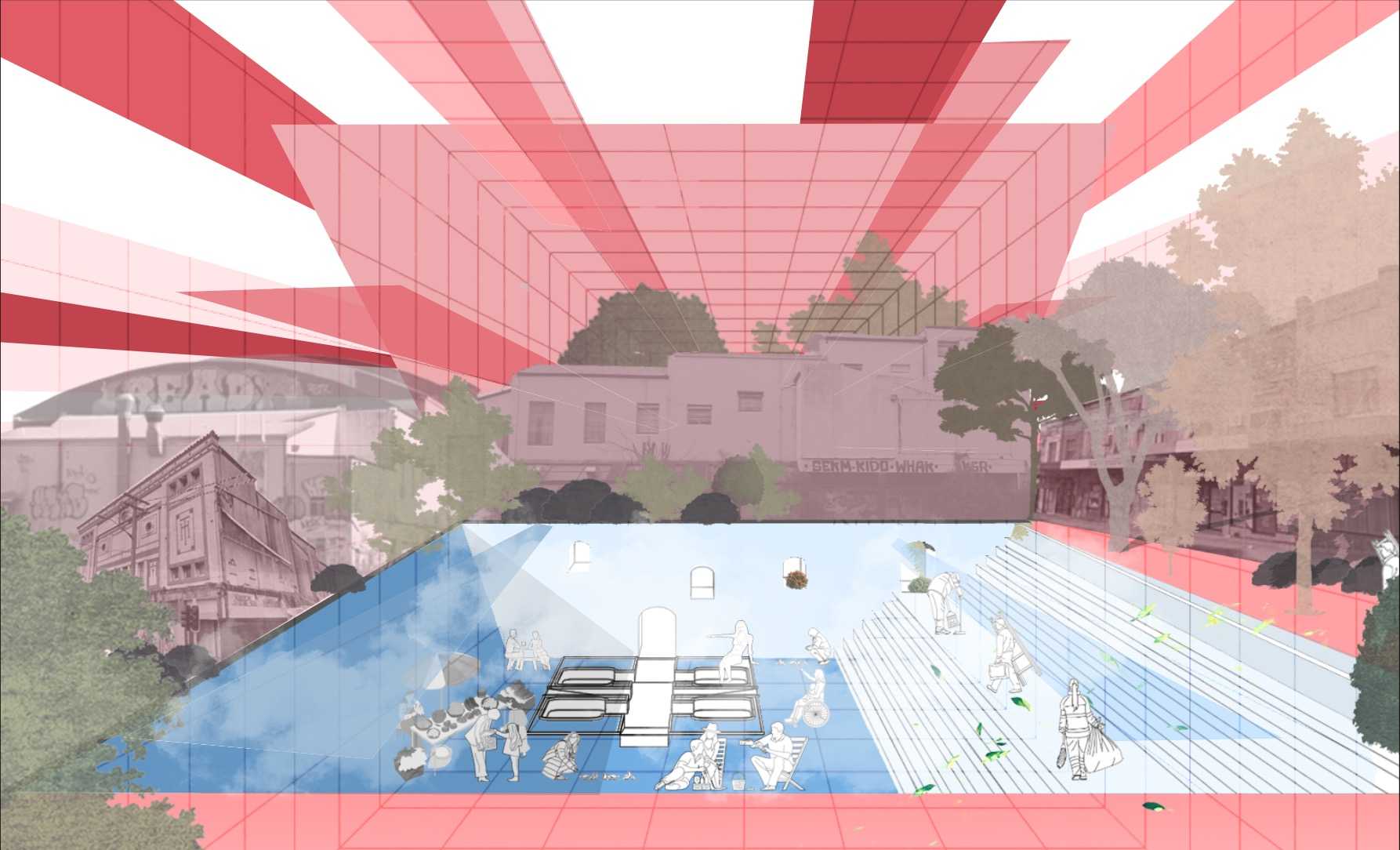
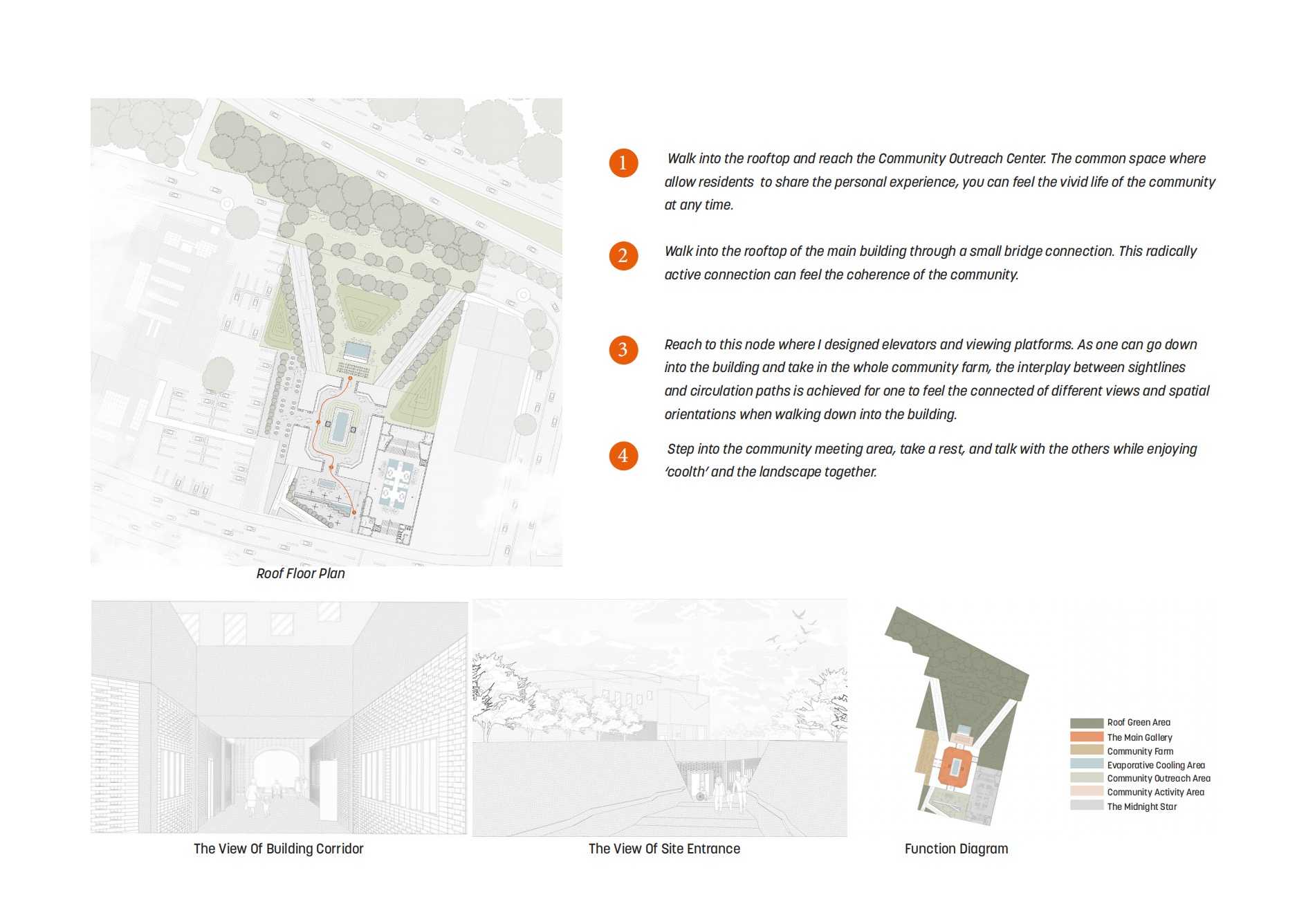
coolth.” Platforms, sitting areas, wide, shaded open spaces, as well as small
parks, are clustered around the water channel to activate this site, encourag�ing children, food sellers, residents, and others to share the “coolth” through
public activities and interactions.
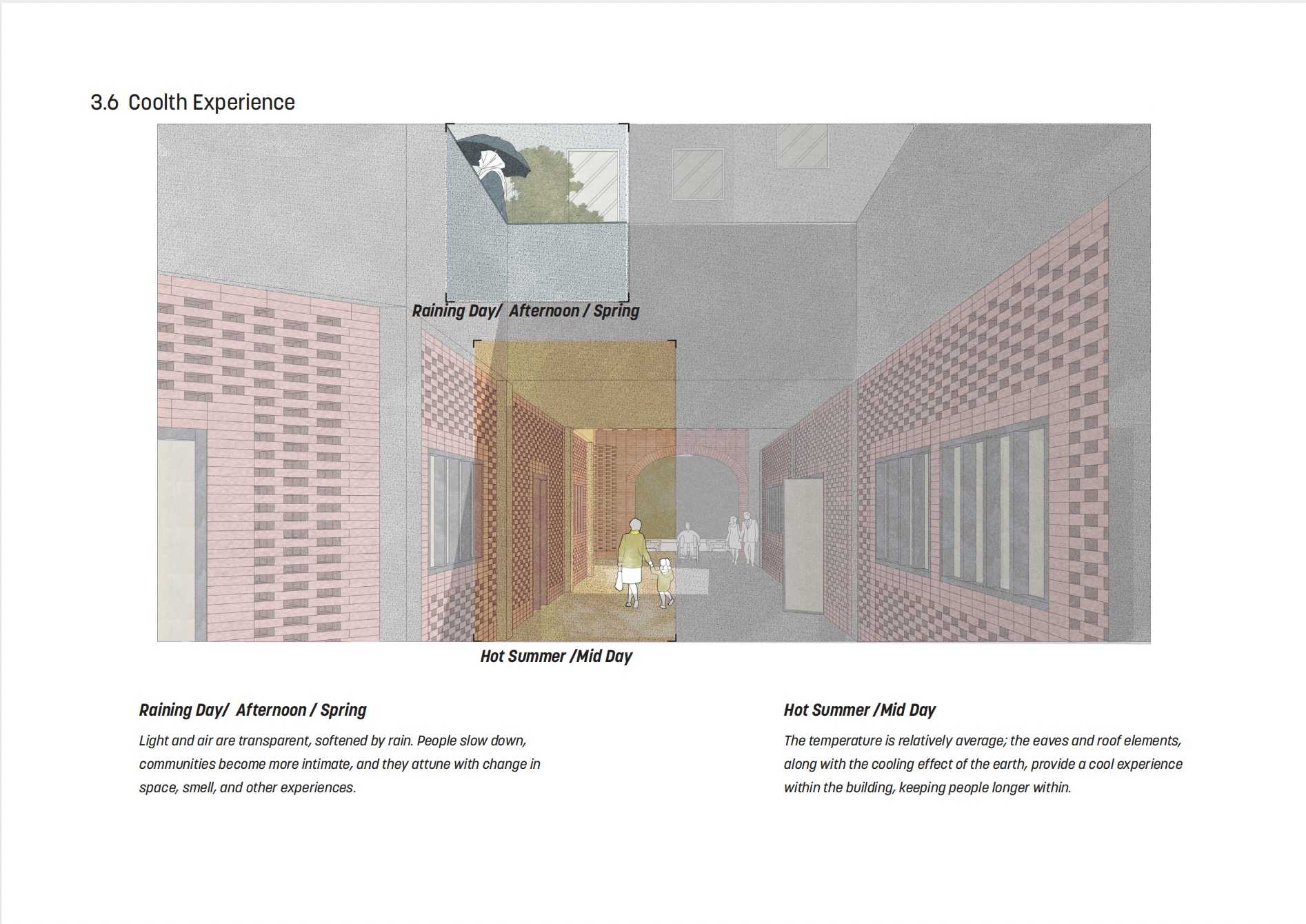
This project is an exploratory project that experiments with an ecological ar�chitecture resisting heat without mechanical merits, such as the mass of the
earth, shading, and passive cooling principles, tries to shift the architectural
culture from indoor coolth to urban public coolth, and hopes that, in the future
city, everyone will have equal access to comfort, and in this city, the coolth
can be produced, collected, and distributed, but not consumed