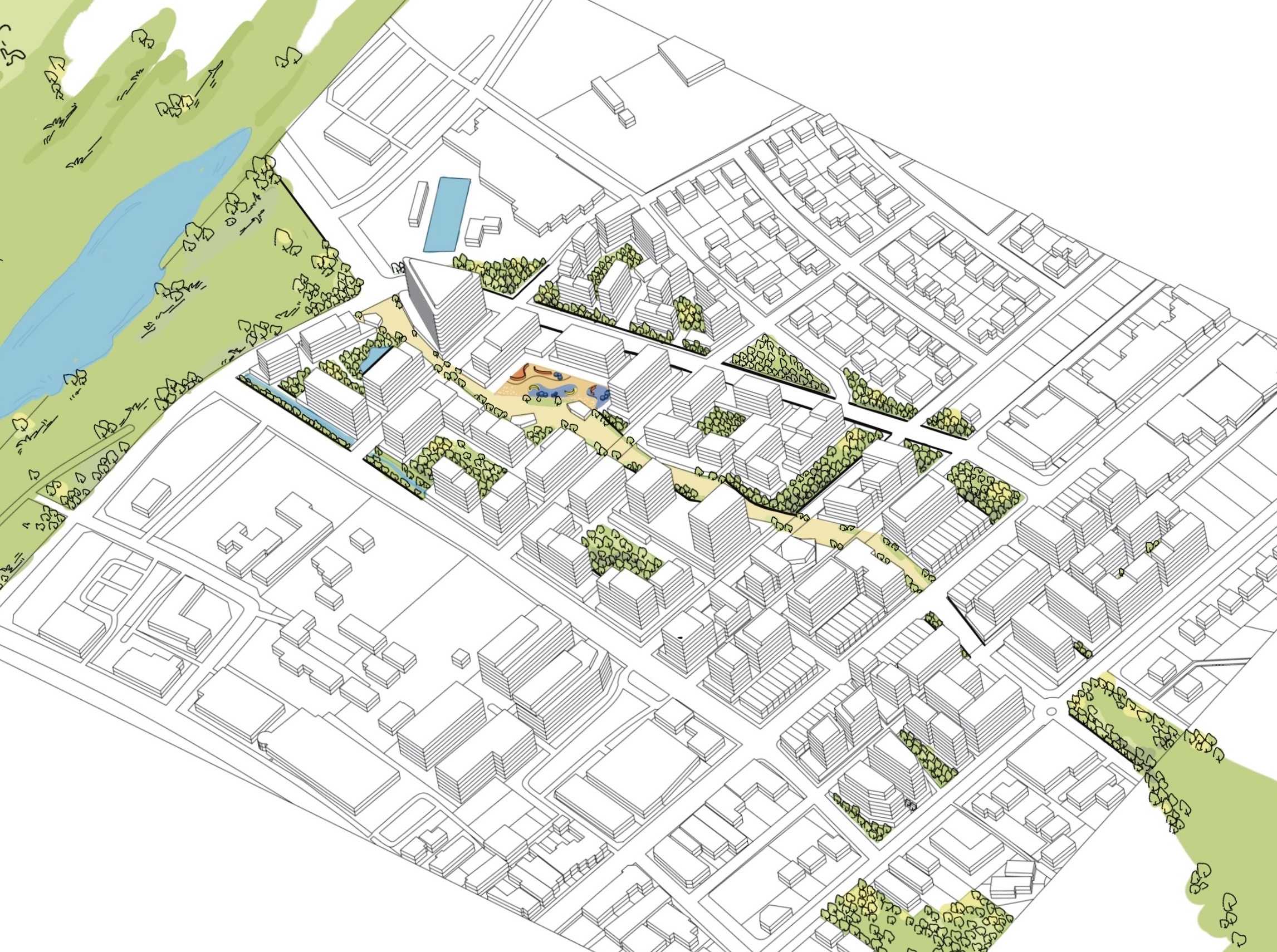
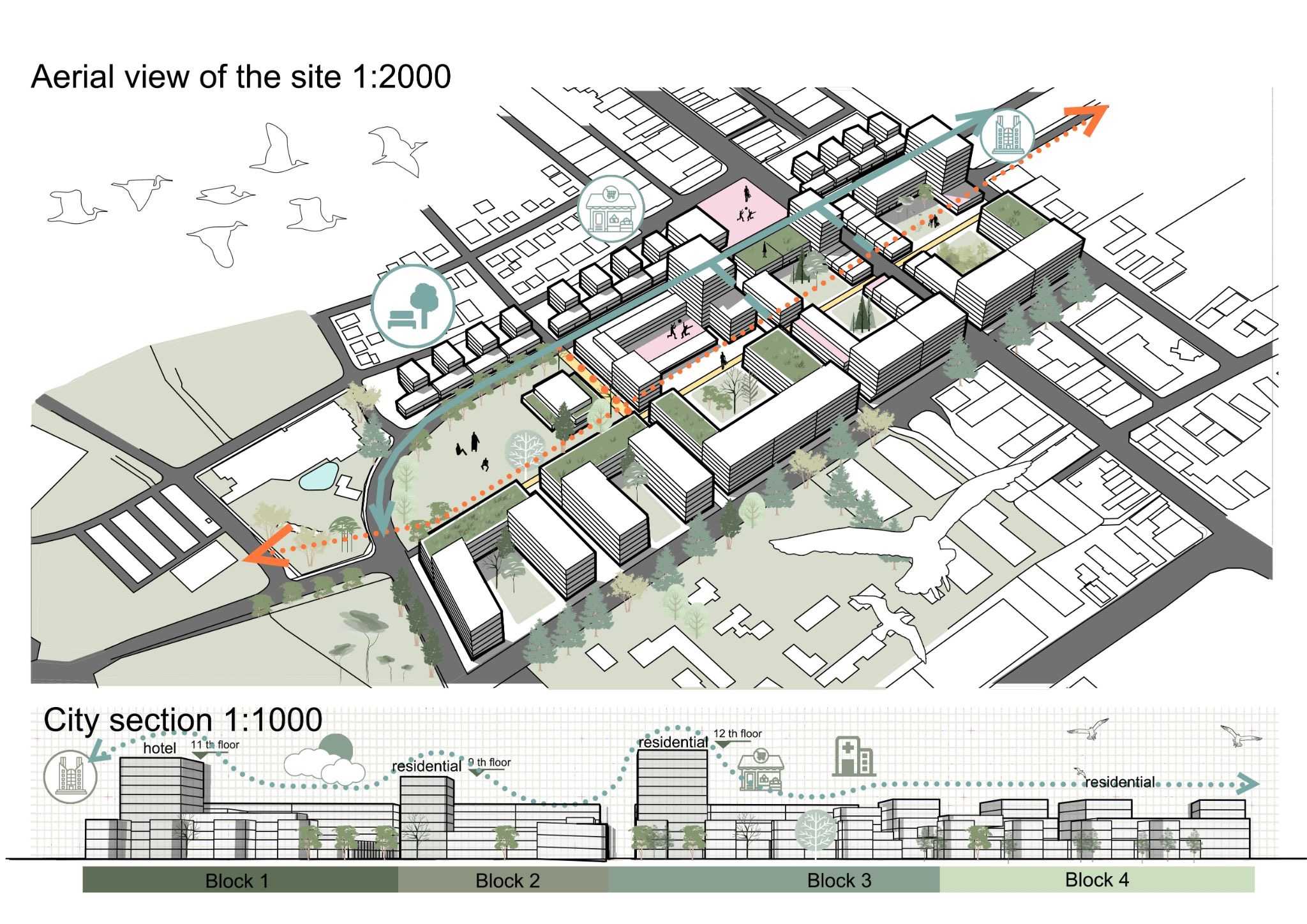
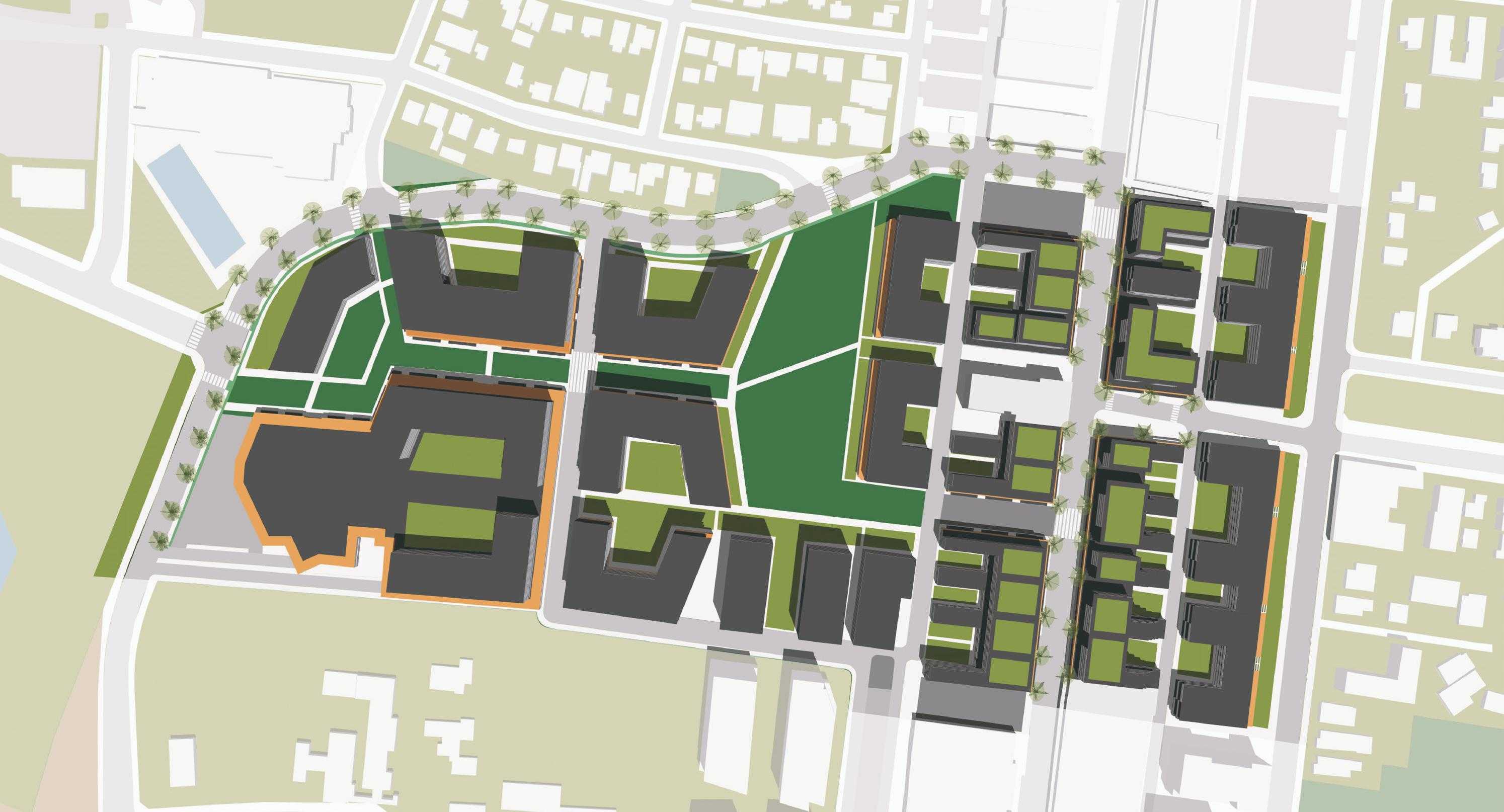
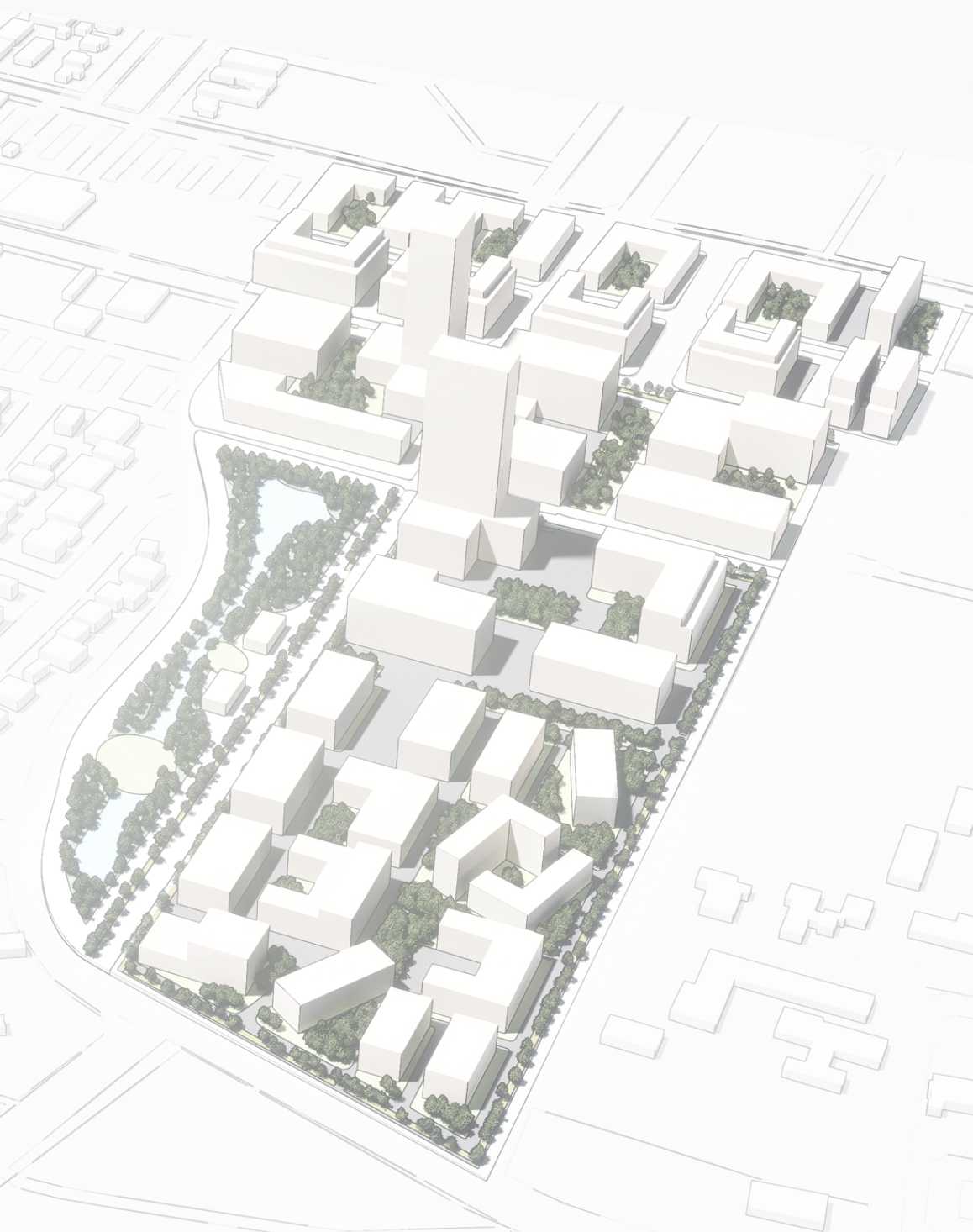
St Marys is set to evolve from a car-dependent suburb into a vibrant, well-connected urban centre offering diverse opportunities for living, working, and recreation.
This studio investigates how urban form and public space can shape this transformation, creating an authentic, walkable, and socially connected environment.
Inspired by Kim Dovey’s idea of ‘spaces of public encounter,’ the work explores how design can foster the ‘common’—shared experiences and connections that lay the foundation for community life.
Located along Queen Street and centred on a major transport interchange, St Marys has strong structural potential yet faces challenges of low density, limited mixed-use activity, and car-dominated landscapes.
The arrival of the Metro, linking St Marys to the Western Sydney Aerotropolis, positions it for major growth under the Western District Plan and the Transport-Oriented Development Program.
Through critical engagement with government master plans, the studio proposes alternative visions for two key areas: the Station Precinct, integrating surplus Metro land with fine-grain retail, and the Town Park Precinct, reimagining open spaces and retail connections.
Combining research, spatial analysis, and design experimentation, the work envisions St Marys as a thriving Western Parkland City destination built on accessibility, intensity, and everyday urban life.
With thanks to the following contributors and critics:
Martin Abbott (ADP), Craig Alchin (Six Degrees Urban), Ken Baird (City of Sydney), Greg Burgon (Architectus), Michelle Cramer (Frazer-Nash Consultancy), Jonathan Knapp (SJB), Jan McCredie (City of Parramatta Council), Marco Marin (City of Parramatta Council), Aditya Malshe (City of Penrith Council), Richard Nugent (CM+), Deepti Prasad (ADP), Tanya Vincent (Transport for NSW), Vera Xia (ADP)